Cornerstone Guide // Survival Skills
The Field First Aid Guide: Trauma Care When Help Is Hours Away
In the first golden hour, three interventions decide most outcomes: stop the bleeding, keep the airway open, and prevent the patient from losing heat. This is how to run them.
Key takeaways // 30-second read
- Take a Stop the Bleed and wilderness first aid course — this guide supports training, it does not replace it.
- Run the primary survey in order: safety, responsiveness, airway, breathing and circulation, then disability and exposure.
- For catastrophic limb bleeding, a commercial windlass tourniquet two to three inches above the wound, tightened until bleeding stops, marked with the time, and never loosened in the field.
- Shock management is warmth: insulate from the ground, cover the patient, and give nothing by mouth.
- Splint fractures without straightening them, and re-check circulation beyond the splint every fifteen minutes.
- Rehearse four times a year. Skills you cannot perform in the dark under pressure are not skills yet.
The uncomfortable truth about field medicine
This guide is education, not certification, and it cannot replace hands-on training. Take a Stop the Bleed course and a wilderness first aid course before you rely on any of it. What follows is the framework those courses teach, written so you can rehearse it with your household before you need it.
When emergency services are hours away, your job changes. You are not diagnosing. You are keeping a patient alive long enough to reach care, and the interventions that matter are few.
The primary survey, in order
- Safety first. Do not become a second casualty. Traffic, fire, unstable structures, electrical hazards and aggression come before the patient.
- Responsiveness. Talk to the patient, tap the shoulders, note whether they answer and whether they answer sensibly.
- Airway. Look, listen and feel for breathing. If the patient is unresponsive and breathing, use the recovery position to protect the airway.
- Breathing and circulation. Look for obvious bleeding, and check for pale, cold or clammy skin.
- Disability and exposure. Check pupils and level of response, then cut clothing away to find wounds you have not seen.
Bleeding control: the one skill to practise until it is automatic
Catastrophic bleeding kills faster than anything else in the field. Work from the wound outward:
- Direct pressure. Firm, continuous pressure on the wound, holding for at least five minutes without lifting to check.
- Wound packing. For deep wounds in the groin, armpit or neck, pack haemostatic gauze directly into the wound and hold pressure for three minutes.
- Tourniquet. For life-threatening bleeding from an arm or leg that does not stop with pressure, apply a commercial windlass tourniquet two to three inches above the wound, avoiding joints. Tighten until bleeding stops. Write the time on the tourniquet, or on the patient's forehead, and never loosen it in the field.
A commercially manufactured tourniquet is the only version to trust. Improvised tourniquets fail at exactly the moment you need them not to.
Shock: keep them warm
Shock is inadequate circulation, and it is common after significant blood loss. Signs include pale or grey skin, rapid shallow breathing, confusion, thirst and a weak rapid pulse. Lay the patient flat, raise the legs slightly if no spinal injury is suspected, insulate them from the ground, cover them, and stop them from cooling further. Do not give food or drink — surgical patients need an empty stomach, and in a survival situation a vomiting patient is a choking patient.
Fractures and sprains
Immobilise, do not straighten. Splint with anything rigid padded on both sides, immobilising the joints above and below the injury. Check circulation beyond the splint — colour, warmth, pulse and sensation — and loosen the splint if fingers or toes turn cold or blue. Ice and elevation reduce swelling; the purpose of the splint is preventing movement, not achieving perfect alignment.
Burns, heat and cold
- Burns: cool running water for twenty minutes, remove jewellery and clothing that is not stuck, cover with a clean non-adherent dressing. No butter, no ice, no bursting blisters.
- Heat exhaustion: get the patient to shade, cool actively with wet cloths and airflow, and give small sips of water if fully alert. Heat stroke — hot skin with confusion or collapse — is a life-threatening emergency: cool aggressively and transport.
- Hypothermia: handle gently, remove wet clothing, insulate from the ground, and warm the core. Do not rub limbs or give alcohol.
Build the kit around the response
A household first aid kit is not a trauma kit, and a trauma kit is not a medicine cabinet. Keep three: a general home kit for cuts, burns and illness; a trauma pouch with tourniquet, haemostatic gauze, pressure bandage and shears in the car and in the bug-out bag; and a medication supply for prescription needs with rotation dates. Restock after every use, and check expiration dates twice a year.
Rehearse, then rehearse again
Skills decay in months. Run a household drill four times a year: find the kit in the dark, apply a tourniquet to a partner in under a minute, practise the recovery position, and recite who calls whom. Speed comes from repetition, not from owning better equipment.
Gear & Equipment // Tested
The gear we actually run
Bought at retail and used in the same drills described above. Links are affiliate links — they cost you nothing extra and keep this site independent.
As an Amazon Associate we earn from qualifying purchases.

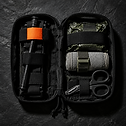
Amazon pick · Medical
Trauma IFAK with Windlass Tourniquet
Tourniquet, haemostatic gauze, pressure bandage, shears and tape in one pouch. Bleeding control is the one thing a household kit usually lacks.
Street price: $60–$130
Check price on Amazon
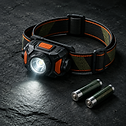
Amazon pick · Light
Rechargeable 400-Lumen Headlamp
Hands-free light for shelter, first aid and blackout cooking. Get one that takes both USB-C and AAA so you are never stranded without power.
Street price: $25–$50
Check price on Amazon
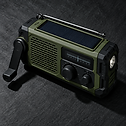
Amazon pick · Comms
NOAA Hand-Crank Emergency Radio
When towers drop, NOAA weather radio and local AM/FM are the only live information left. Crank or solar keeps it running without batteries.
Street price: $30–$60
Check price on AmazonFAQ // Read before you buy
Frequently asked questions
Newsletter // article
Get the next breakdown
New video articles, gear notes from testing and tool updates — one email a week.
No spam. Unsubscribe any time. We never sell subscriber data.
Keep going // 3 more
Related reading

Surviving a Blizzard in a Self-Built Underground Cabin
A builder rides out a brutal arctic blizzard inside a self-built underground log-and-stone cabin. See why earth-bermed shelters beat tents in extreme cold.

What a Ranger Carries Every Day: Survival Gear Breakdown
A veteran ranger empties his pockets and explains the everyday carry survival gear he actually trusts daily: knife, fire starter, cordage, and first aid kit.

Surviving a Severe Snowstorm in an Abandoned Stone House
Watch a survival expert ride out a brutal blizzard inside an abandoned stone house, with winter shelter tactics for insulation, drafts, and safe heating.